
PCOS Symptoms Every Woman Should Never Ignore
Dr Anusha Reddy
July 20, 2026
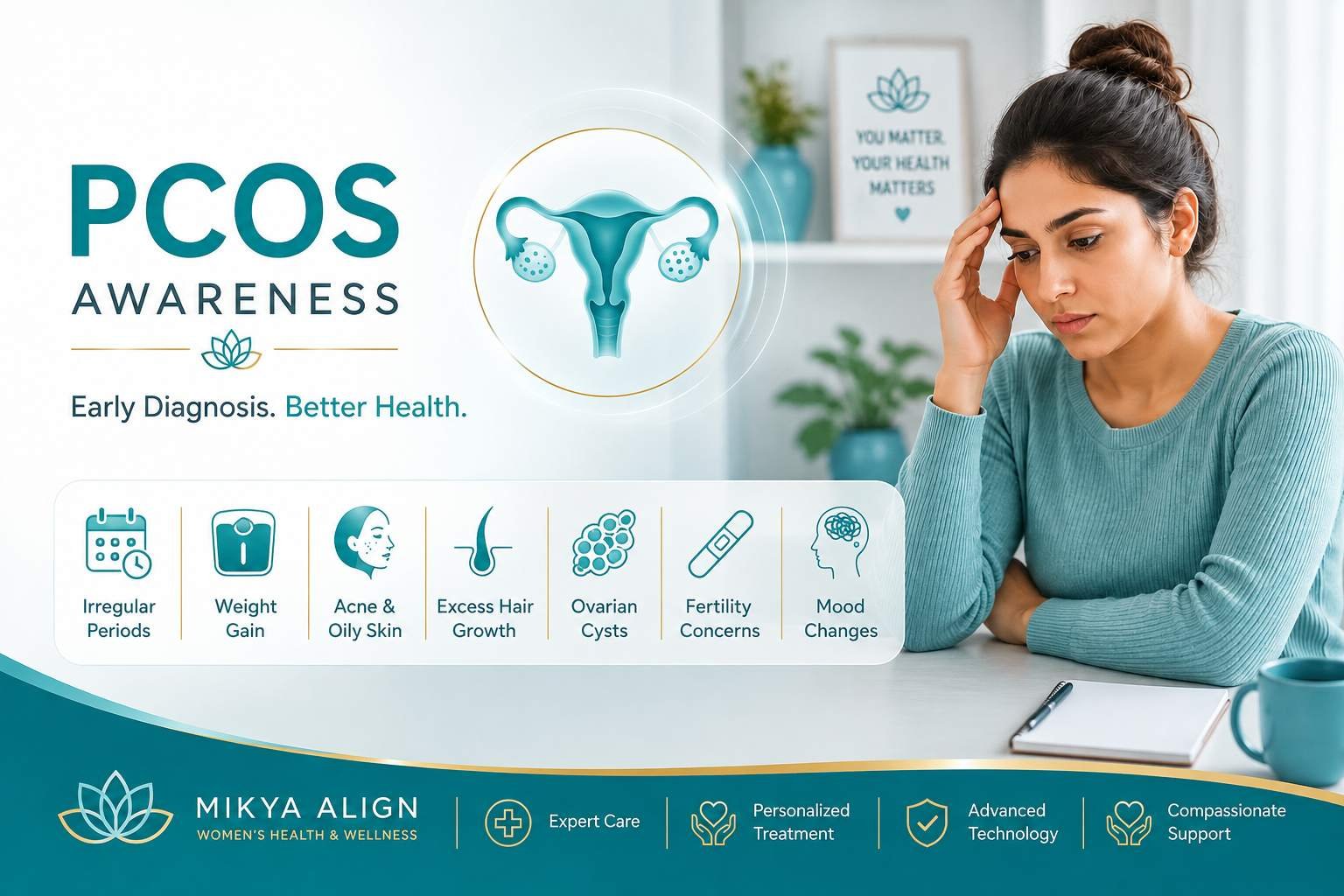
Many women experience irregular periods, sudden weight gain, acne, or unwanted facial hair and assume these changes are “normal.” While occasional hormonal changes can happen, persistent symptoms may point to Polycystic Ovary Syndrome (PCOS)—one of the most common hormonal conditions affecting women of reproductive age.
The good news is that PCOS can be managed effectively when diagnosed early. At Mikya Align Women’s Health & Wellness, we help women understand their bodies, restore hormonal balance, improve fertility, and lead healthier lives through personalized treatment plans.
What is PCOS?
Polycystic Ovary Syndrome (PCOS) is a hormonal disorder in which the ovaries produce higher-than-normal levels of androgens (male hormones). This hormonal imbalance can affect ovulation, menstrual cycles, metabolism, skin health, and fertility.
Despite its name, not every woman with PCOS develops ovarian cysts. The condition varies from person to person, making early medical evaluation essential.
Common Symptoms of PCOS
If you experience one or more of the following symptoms regularly, it is important to consult a gynecologist.
Irregular or Missed Periods
Periods may occur only a few times a year, arrive unpredictably, or stop altogether.
Difficulty Getting Pregnant
Irregular ovulation is one of the leading causes of infertility in women with PCOS.
Weight Gain
Many women notice weight gain, especially around the abdomen, even with regular physical activity.
Acne and Oily Skin
Persistent acne after adolescence is often linked to hormonal imbalance.
Excess Facial or Body Hair
Increased androgen levels can cause excessive hair growth on the face, chin, chest, abdomen, or back.
Hair Thinning
Some women notice gradual thinning of scalp hair or hair loss similar to male-pattern baldness.
Dark Skin Patches
Dark, velvety skin around the neck, underarms, or groin can indicate insulin resistance associated with PCOS.
Mood Changes
Anxiety, stress, depression, and emotional fluctuations are commonly associated with hormonal imbalance.
What Causes PCOS?
Although the exact cause is still being studied, several factors contribute to PCOS.
- Hormonal imbalance
- Insulin resistance
- Genetic predisposition
- Chronic inflammation
- Lifestyle and obesity
Usually, multiple factors work together rather than a single cause.
How PCOS Affects Fertility
PCOS often prevents the ovaries from releasing an egg regularly.
Without regular ovulation:
- Pregnancy becomes difficult.
- Egg quality may reduce.
- Hormonal imbalance increases.
- Pregnancy complications become more common.
Fortunately, many women with PCOS conceive naturally or with appropriate fertility support.
Can PCOS Be Cured?
There is currently no permanent cure, but PCOS can be managed very effectively.
Treatment focuses on:
- Regulating menstrual cycles
- Improving ovulation
- Managing weight
- Reducing unwanted hair growth
- Improving fertility
- Preventing diabetes and heart disease
Many women successfully control PCOS through lifestyle modifications combined with medical treatment.
Lifestyle Changes That Help
Small lifestyle improvements can make a significant difference.
Eat a Balanced Diet
Choose:
- High-fiber foods
- Fresh vegetables
- Fruits
- Lean proteins
- Whole grains
Reduce:
- Sugary drinks
- Processed foods
- Refined carbohydrates
Exercise Regularly
Aim for at least 30–45 minutes of physical activity most days of the week.
Even brisk walking improves insulin sensitivity.
Maintain a Healthy Weight
Losing just 5–10% of body weight may help restore ovulation and improve fertility.
Sleep Well
Poor sleep affects hormones and insulin resistance.
Aim for 7–8 hours of quality sleep daily.
Manage Stress
Yoga, meditation, and breathing exercises help improve hormonal balance.
When Should You Visit a Gynecologist?
Book an appointment if you have:
- Missed periods for more than three months
- Heavy or prolonged bleeding
- Difficulty conceiving
- Severe acne
- Excess facial hair
- Rapid weight gain
- Hair thinning
- Persistent pelvic pain
Early diagnosis leads to better long-term health outcomes.
How Mikya Align Helps Women with PCOS
At Mikya Align Women’s Health & Wellness, every woman receives individualized care based on her symptoms, lifestyle, and future pregnancy plans.
Our approach includes:
- Comprehensive hormonal evaluation
- Ultrasound assessment
- Fertility counseling
- Personalized nutrition guidance
- Lifestyle modification support
- Ovulation management
- Advanced medical treatment
- Long-term hormonal health monitoring
Our goal is not only to treat PCOS but to improve your overall health, confidence, and quality of life.
Frequently Asked Questions
Can women with PCOS become pregnant?
Yes. Many women with PCOS conceive naturally or with appropriate fertility treatment.
Is PCOS a lifelong condition?
PCOS is a long-term hormonal condition, but its symptoms can be effectively managed with the right care.
Does every woman with PCOS have ovarian cysts?
No. Many women diagnosed with PCOS do not have visible ovarian cysts.
Can weight loss improve PCOS?
Yes. Even modest weight loss often improves ovulation, menstrual regularity, and fertility.
Does PCOS increase diabetes risk?
Yes. Women with PCOS have a higher risk of insulin resistance and Type 2 diabetes, making regular follow-up important.
Take the First Step Towards Better Hormonal Health
Ignoring irregular periods or hormonal symptoms can delay diagnosis and affect future fertility. Early care can make a meaningful difference.
If you’re experiencing symptoms of PCOS, the specialists at Mikya Align Women’s Health & Wellness are here to provide compassionate, evidence-based care tailored to your needs.
Book your consultation today and begin your journey toward balanced hormones, improved fertility, and lifelong women’s wellness.