Our Services
PCOS & Hormonal Disorder Treatment
UNDERSTANDING YOUR HORMONAL HEALTH
PCOS Is More Than Irregular Periods
Polycystic Ovary Syndrome (PCOS) is a common hormonal condition that can affect women in different ways.
For some, it may appear as irregular periods or acne. For others, it may involve excess hair growth, weight changes, difficulty with ovulation or fertility concerns.
Because every woman experiences PCOS differently, effective care should look beyond individual symptoms and consider your overall hormonal, metabolic and reproductive health.
What Is PCOS?
PCOS is a hormonal and metabolic condition that can affect ovulation and reproductive health. It may also be associated with changes in androgen levels and insulin regulation.
Not every woman with PCOS has the same symptoms, and having ovarian cysts is not required to have PCOS.
A proper medical assessment is important to understand whether your symptoms are related to PCOS or another hormonal condition.
-
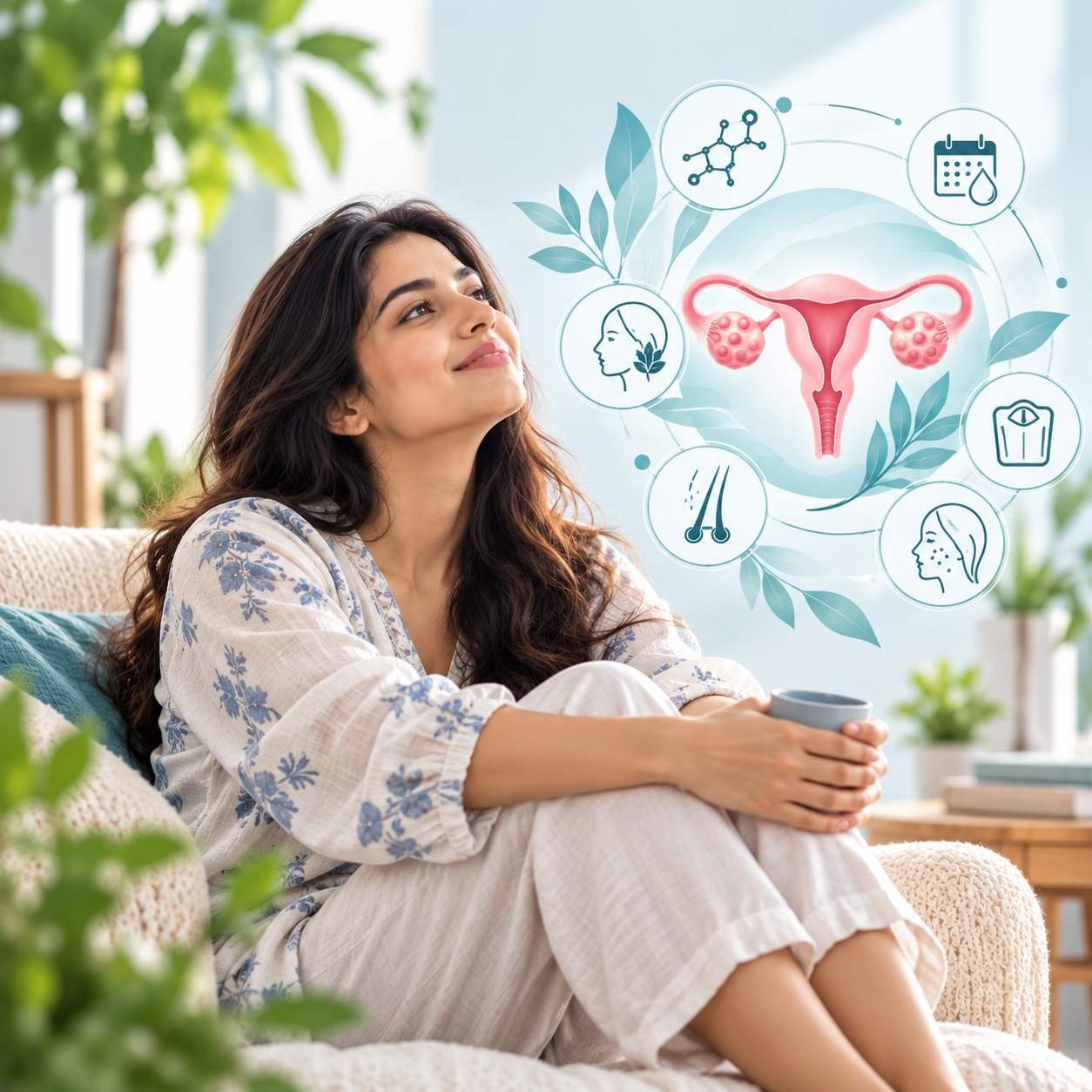
Hormonal Changes
Changes in reproductive hormones and androgen levels may contribute to symptoms such as acne, excess hair growth and irregular cycles.
-
Ovulation & Periods
PCOS can affect ovulation and lead to irregular or infrequent menstrual cycles.
-
Metabolic Health
Some women with PCOS may also experience insulin resistance or other metabolic concerns.
Could Your Symptoms Be Hormonal?
Hormonal disorders can present differently from one woman to another. If you are experiencing persistent changes, a proper evaluation can help identify the possible cause.
-
Hormonal Changes
Periods that are irregular, infrequent or unpredictable.
-
Acne & Oily Skin
Persistent acne or increased oiliness associated with hormonal changes.
-
Excess Hair Growth
Increased facial or body hair may be associated with higher androgen levels.
-
Weight Changes
Difficulty managing weight or unexplained changes may sometimes occur alongside hormonal or metabolic concerns.
-
Hair Thinning
Changes in hormone levels may contribute to thinning of scalp hair.
-
Fertility Concerns
Irregular ovulation can make conception more difficult for some women.
PCOS Diagnosis Starts With Understanding Your Story
There is no single test that confirms PCOS in every woman.
Your assessment may involve understanding your menstrual history, symptoms, medical history and reproductive goals. Depending on your situation, your doctor may recommend blood tests, ultrasound or other investigations to evaluate hormone levels and rule out other possible causes.
01
Your Symptoms
↓
02
Medical & Menstrual History
↓
03
Clinical Assessment
↓
04
Relevant Tests
↓
05
Personalised Diagnosis & Plan