
Our Services
Robotic Gynecologic Surgery
A MORE PRECISE APPROACH TO GYNECOLOGIC SURGERY
Advanced Technology. Expert Surgical Care. Personalised Decisions.
When surgery is recommended, the approach matters.
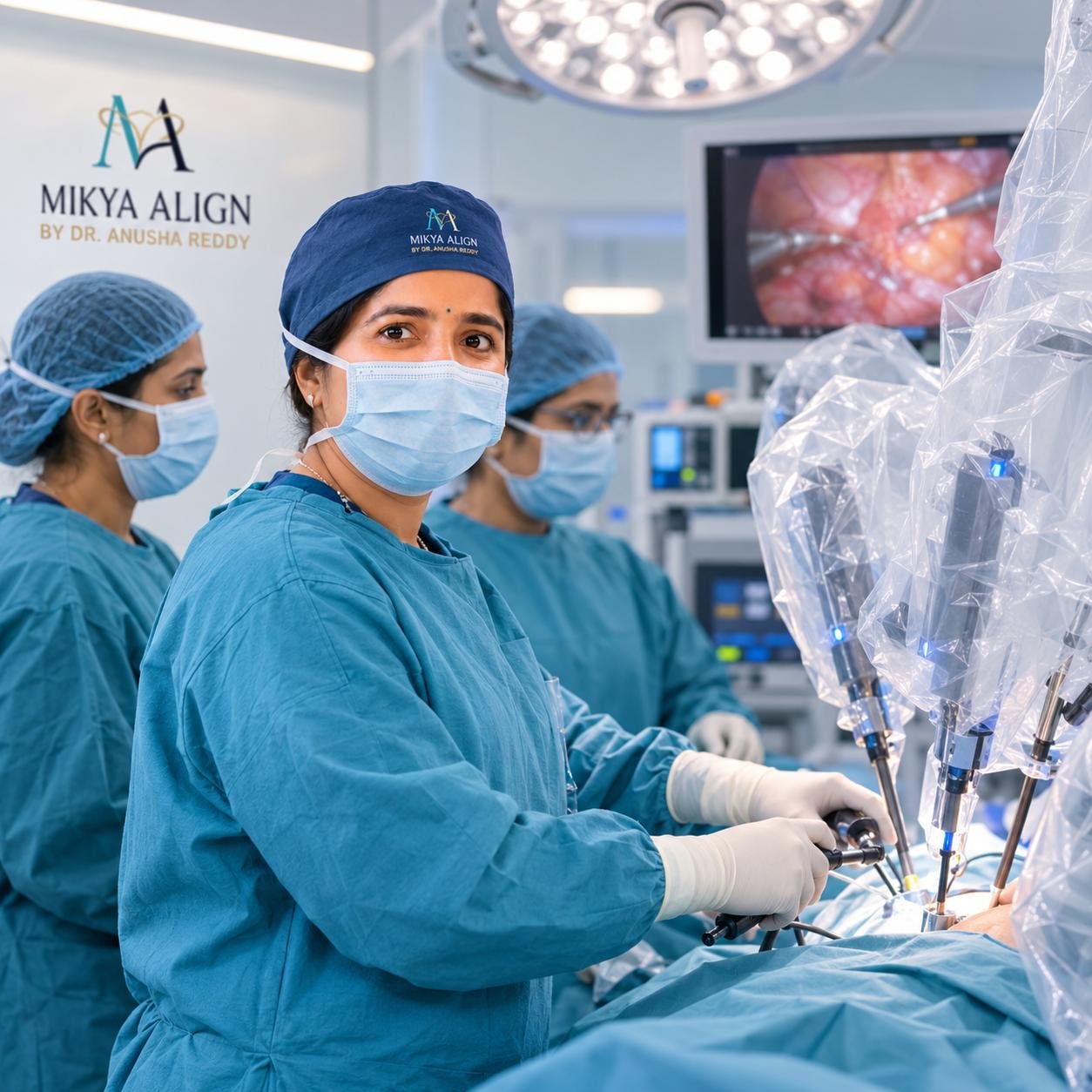
Robotic-assisted gynecologic surgery is a minimally invasive technique in which the surgeon controls specialised robotic instruments through a console. The system provides enhanced visualisation and instrument control while allowing the surgeon to perform delicate movements through small incisions.
At Mikya Align, technology is used as a tool to support surgical expertise—not replace it. Every procedure begins with a detailed evaluation to determine whether robotic, laparoscopic, vaginal or open surgery is most appropriate for your individual condition.
What Is Robotic-Assisted Surgery?
Robotic gynecologic surgery is a form of minimally invasive surgery performed by a trained surgeon using a robotic surgical system.
The surgeon remains fully in control of the procedure. The robotic system translates the surgeon’s hand movements into precise movements of specialised instruments while providing a magnified view of the surgical field.
This can be particularly useful when surgery requires precise dissection, suturing or access to challenging anatomical areas.
-
Enhanced Visualisation
A magnified, high-definition view helps the surgeon see the surgical area in greater detail.
-
Precision & Control
Specialised instruments allow controlled and precise movements during complex procedures.
-
Minimally Invasive Access
Many robotic procedures are performed through small incisions rather than a larger abdominal incision.
When Can Robotic Surgery Be Considered?

Uterine Fibroids
Fibroids that cause heavy bleeding, pelvic pressure, pain or other significant symptoms may sometimes be treated surgically.

Endometriosis
Advanced or deep endometriosis may require surgery to remove endometriotic tissue and address associated symptoms.

Uterine Conditions
Certain uterine conditions requiring hysterectomy or other surgical procedures may be suitable for a minimally invasive approach.
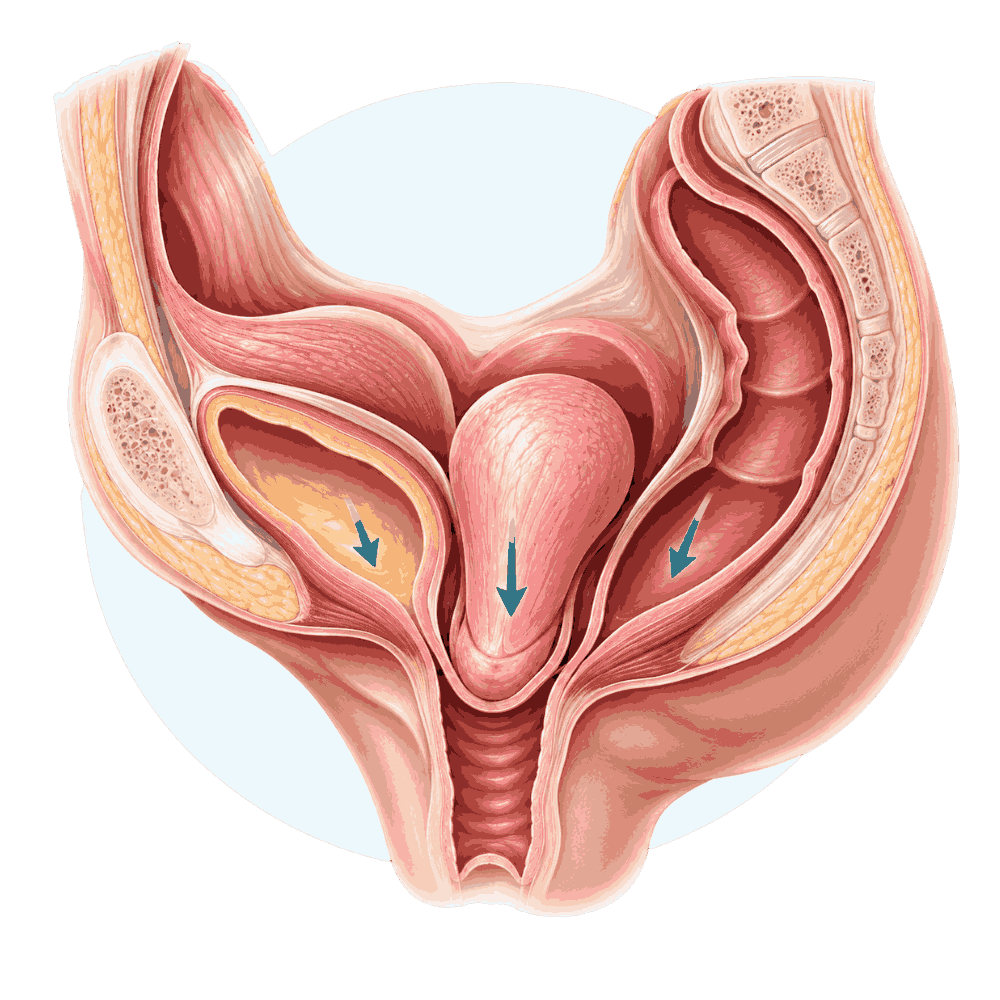
Pelvic Organ Prolapse
Selected prolapse conditions may be treated using robotic-assisted reconstructive procedures.
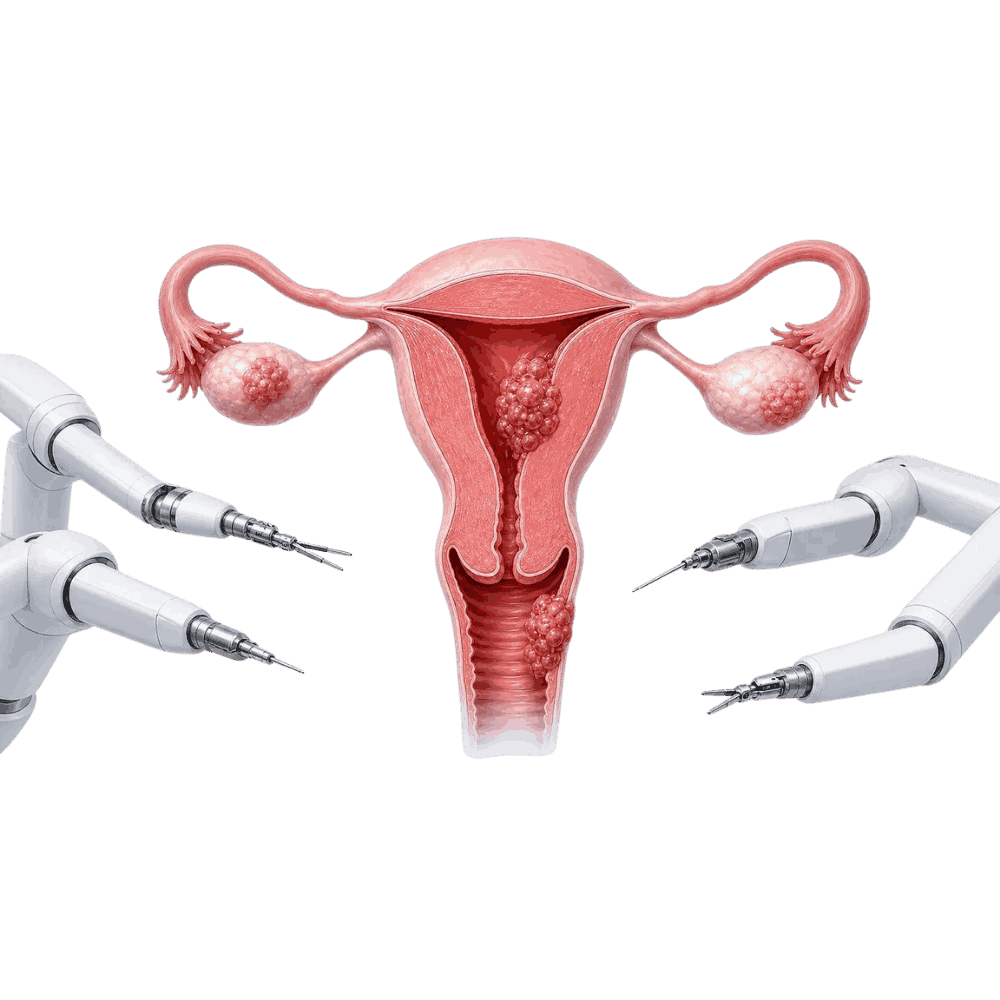
Complex Gynaecological Conditions
Robotic techniques may provide an option for selected complex or technically challenging procedures.

Selected Gynaecologic Cancers
Robotic surgery may be used as part of the surgical management of certain gynaecologic cancers when clinically appropriate.
Why Choose a Minimally Invasive Robotic Approach?
When robotic surgery is appropriate, the minimally invasive approach may offer several advantages compared with traditional open surgery.
-
Smaller Incisions
Small incisions may result in less visible scarring compared with larger open surgical incisions.
-
Less Postoperative Discomfort
Minimally invasive approaches can reduce pain and discomfort for many patients.
-
Reduced Blood Loss
Some minimally invasive procedures are associated with less blood loss than open surgery.
-
Faster Recovery
Many patients can return to normal activities sooner than after traditional open surgery, depending on the procedure and individual recovery.
Robotic Surgery vs Open Surgery:
| Feature | Robotic / Minimally Invasive | Traditional Open Surgery |
|---|---|---|
| Incisions | Usually smaller | Larger incision |
| Visualisation | Magnified surgical view | Direct/open surgical field |
| Postoperative discomfort | Often less | May be greater |
| Hospital stay | Often shorter | May be longer |
| Recovery | Often quicker | May take longer |
| Scarring | Generally smaller | Generally more noticeable |